


Non-Surgical Solutions for Men’s Sexual Health Conditions

Men’s sexual health is closely connected to overall physical, hormonal, and psychological well-being. Conditions such as erectile dysfunction (ED), low testosterone, reduced libido, premature ejaculation, and performance anxiety are more common than many realize.
Common Men’s Sexual Health Conditions
Men’s sexual health is influenced by hormonal balance, cardiovascular function, nerve signaling, psychological well-being, and lifestyle habits. When one or more of these systems becomes disrupted, sexual performance and confidence can be affected. Below are the most common men’s sexual health conditions:
1. Erectile Dysfunction (ED)
Erectile dysfunction is the persistent difficulty in achieving or maintaining an erection firm enough for sexual activity. It may result from poor blood flow, hormonal imbalance, stress, diabetes, cardiovascular disease, or lifestyle factors.
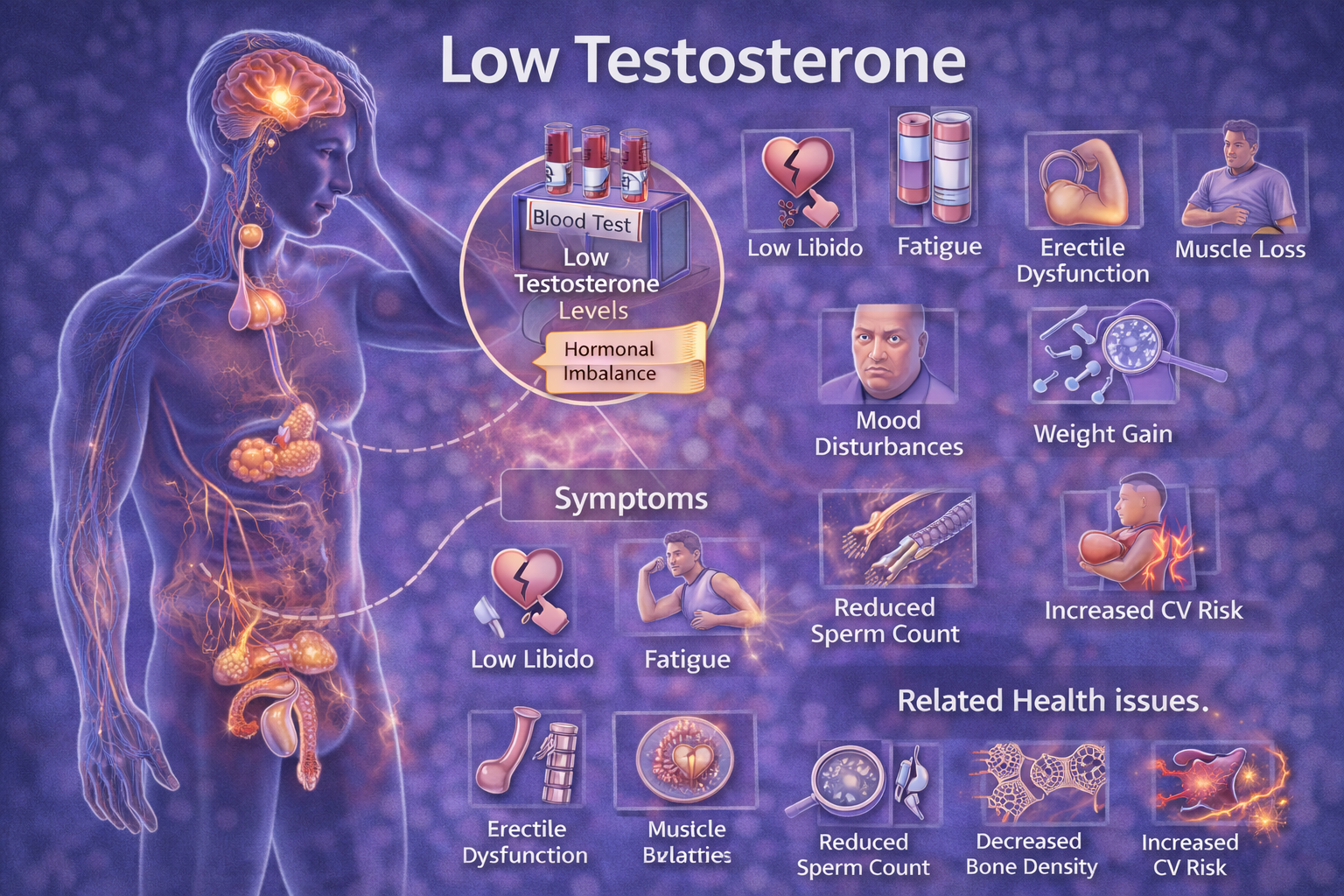
2. Low Testosterone (Low T)
Testosterone plays a vital role in libido, erection quality, energy levels, muscle mass, and mood. Low testosterone can lead to reduced sexual desire, fatigue, decreased stamina, and weaker erections.
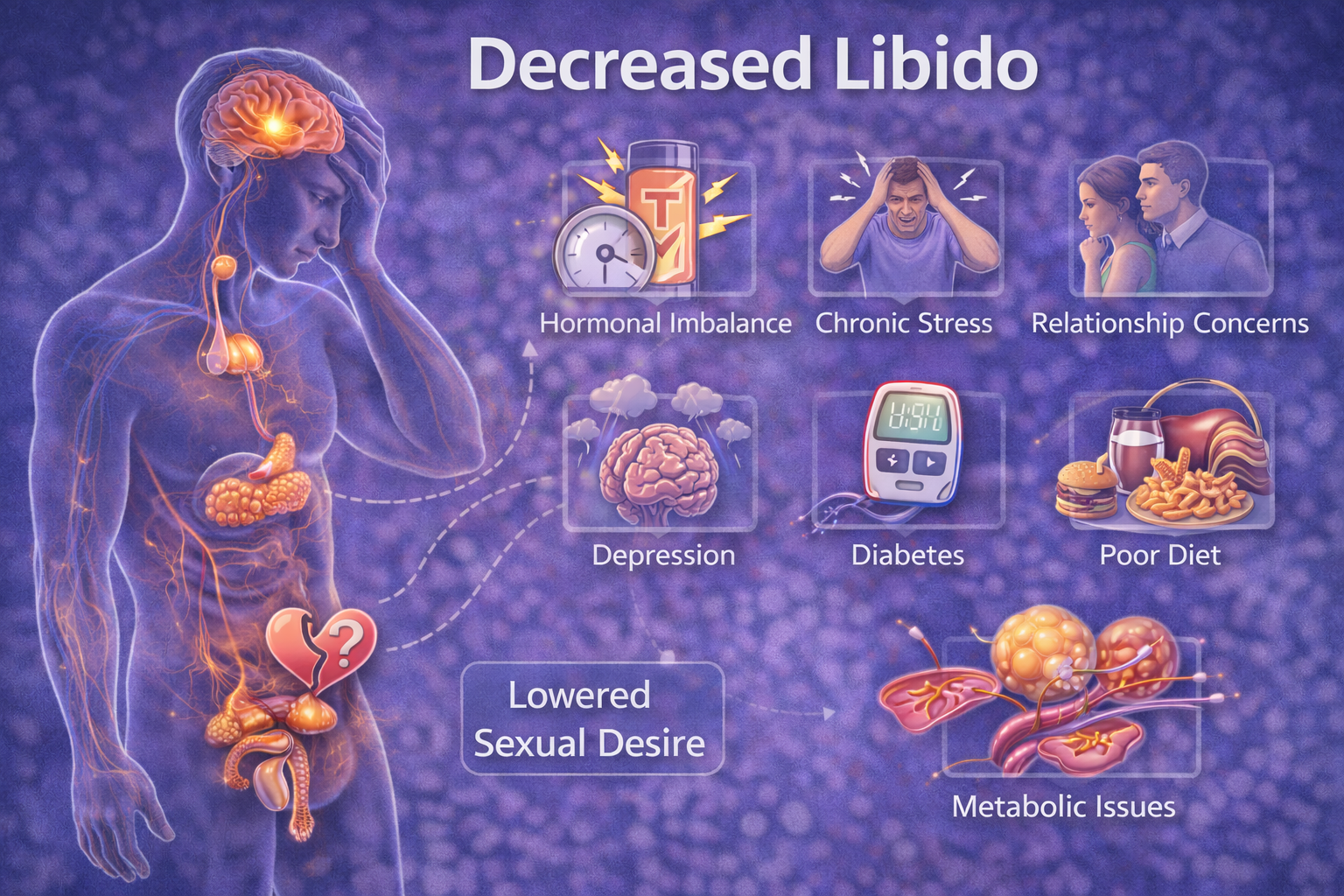
3. Decreased Libido
A reduced interest in sexual activity may be caused by hormonal changes, chronic stress, relationship concerns, depression, or metabolic conditions.
4. Premature Ejaculation
Premature ejaculation occurs when ejaculation happens sooner than desired during sexual activity. It may be influenced by anxiety, heightened sensitivity, or certain neurological factors.
5. Delayed Ejaculation
Delayed ejaculation involves difficulty reaching climax despite adequate stimulation. It can be linked to psychological factors, nerve issues, or medication side effects.
6. Peyronie’s Disease
Peyronie’s disease involves the development of scar tissue within the penis, leading to curvature, discomfort, or difficulty maintaining erections.
7. Performance Anxiety
Psychological stress or fear of underperforming can interfere with erection quality and sexual satisfaction, even when physical health is otherwise normal.
8. Reduced Sexual Stamina
Decreased endurance during sexual activity may result from hormonal imbalance, poor cardiovascular health, stress, or fatigue.
9. Fertility-Related Concerns
Low sperm count, reduced motility, or hormonal imbalances can affect reproductive health and may also influence sexual confidence.
10. Pain During Intercourse
Pain or discomfort during sexual activity may indicate infection, inflammation, structural conditions, or underlying medical issues that require evaluation.
Why Choose Non-Surgical Treatment?
Non-surgical solutions offer several advantages:
-
- Minimally invasive
-
- Lower risk compared to surgery
-
- Short recovery time
-
- Address root causes rather than symptoms alone
-
- Personalized to individual health needs
Modern medicine now focuses on restoration and optimization, not just temporary symptom relief.
Top Non-Surgical Solutions for Men’s Sexual Health
Modern men’s sexual health care has evolved beyond invasive procedures. Today, advanced non-surgical treatments focus on restoring natural function, improving circulation, balancing hormones, and addressing root causes rather than just masking symptoms. Below are the most effective non-surgical solutions available:
1. Hormone Optimization Therapy
Hormonal imbalance, especially low testosterone is one of the leading contributors to sexual dysfunction. Precision hormone therapy can help:
-
- Improve libido
-
- Enhance erection quality
-
- Increase energy and stamina
-
- Support mood stability
Comprehensive hormone testing ensures safe and individualized treatment.
2. Regenerative Therapies
Regenerative approaches are designed to improve blood flow, tissue health, and nerve signaling. These therapies aim to:
-
- Stimulate natural tissue repair
-
- Enhance vascular function
-
- Strengthen long-term erectile response
They focus on restoring performance rather than providing temporary stimulation.
3. Shockwave Therapy
Low-intensity shockwave therapy is a non-invasive treatment that promotes new blood vessel formation and improves penile blood circulation. It is particularly beneficial for men with vascular-related erectile dysfunction.
4. Oral Medications
Prescription medications for erectile dysfunction work by increasing blood flow to support erections. While effective for many men, they are often used alongside lifestyle and hormonal optimization for better long-term outcomes.
5. Lifestyle Optimization Programs
Sexual health is closely tied to overall wellness. Improvements may include:
-
- Regular exercise
-
- Weight management
-
- Balanced, nutrient-rich diet
-
- Improved sleep quality
-
- Stress reduction strategies
These changes enhance circulation, hormone levels, and metabolic health.
6. Nutritional & Antioxidant Support
Targeted supplementation can support sexual health. Nutrients such as zinc, vitamin D, omega-3 fatty acids, and antioxidants help improve hormone balance, sperm quality, and vascular health.
7. Stress & Performance Anxiety Management
Chronic stress and anxiety can interfere with erection quality and libido. Counseling, guided therapy, mindfulness practices, and structured stress-management techniques can significantly improve sexual confidence and performance.
8. Pelvic Floor Therapy
Strengthening pelvic floor muscles through guided exercises can enhance erection quality, improve control, and support overall sexual performance.
Are Non-Surgical Treatments Effective?
Yes,especially when tailored to the individual.
Success depends on identifying the underlying cause of the condition. Many men experience significant improvement when:
-
- Hormones are balanced
-
- Blood flow is optimized
-
- Inflammation is reduced
-
- Stress is managed
-
- Metabolic health is restored
A comprehensive evaluation is essential.
Take the First Step Toward Restoring Confidence
Your sexual health impacts your confidence, relationships, and overall quality of life.
Schedule Your Confidential Consultation Today
Discover the root cause of your symptoms and explore personalized, non-surgical treatment options tailored to your unique biology.
Book your private appointment with Lumora Wellness and begin your journey toward renewed performance, vitality, and long-term wellness.